Live product

How LaunchForge turned fast note capture into a maintained mobile product

Memossage began with a narrow question: would note capture feel easier if writing a memo felt like sending yourself a message? The public product now shows how that interaction expanded into a maintained mobile service with search, structure, media support, and release discipline.

Review basis

Prepared by LaunchForge from direct review of the Memossage homepage and release notes, with screenshots captured from the live public site.

Reviewed on 2026-03-10

The problem

Many note apps ask users to choose structure before they have captured anything. LaunchForge treated that as the wrong first interaction. The real friction was not long-term organization at the start, but the moment a thought needed to be saved quickly without losing momentum.
Who the product is for

The product is for people who want a lightweight personal capture tool but still need retrieval, folders, media support, and task-style note handling once their saved information grows.

Why we chose this approach

LaunchForge chose a chat-like capture model because it lowers the cost of starting. Structure is added later, where it solves a real retrieval problem instead of being forced into the first-use experience. The public site and release notes show that this approach was extended carefully rather than replaced by a heavier editor paradigm.

What the public product and release trail already show

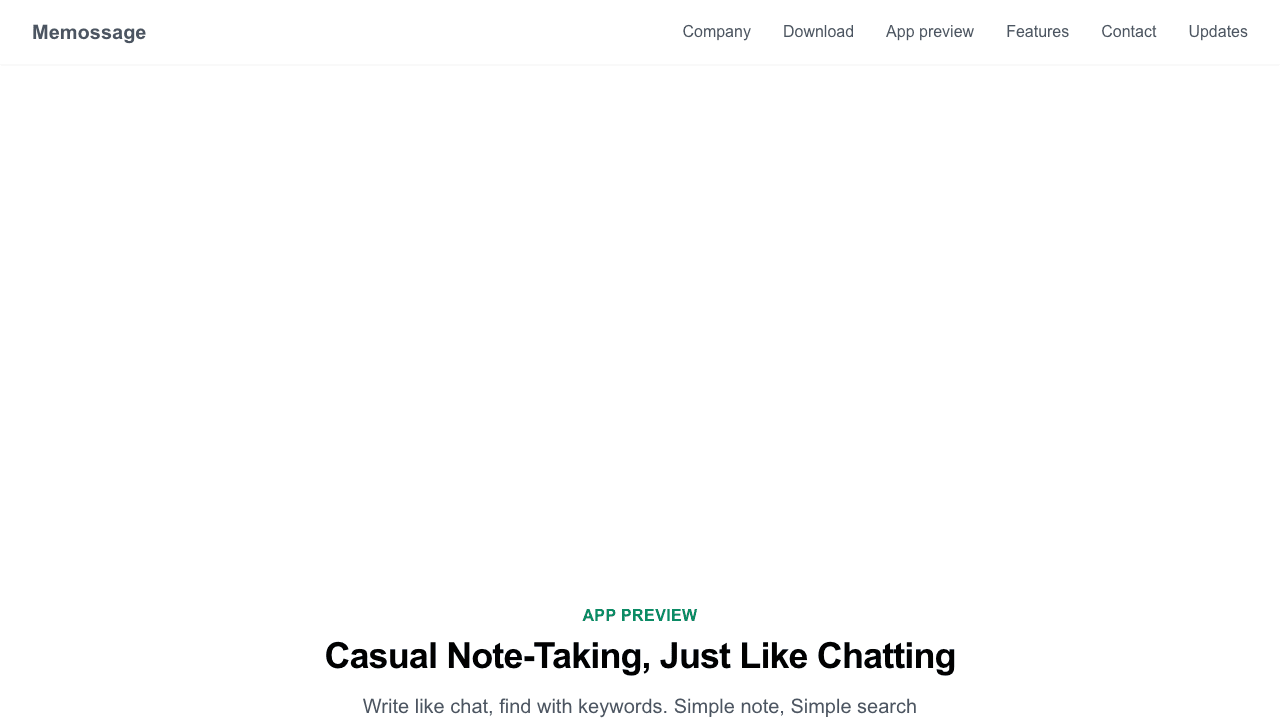
Memossage public homepage showing app preview and feature positioning

The public homepage shows that Memossage is presented as a real product with app preview, feature framing, and distribution intent rather than a placeholder concept.

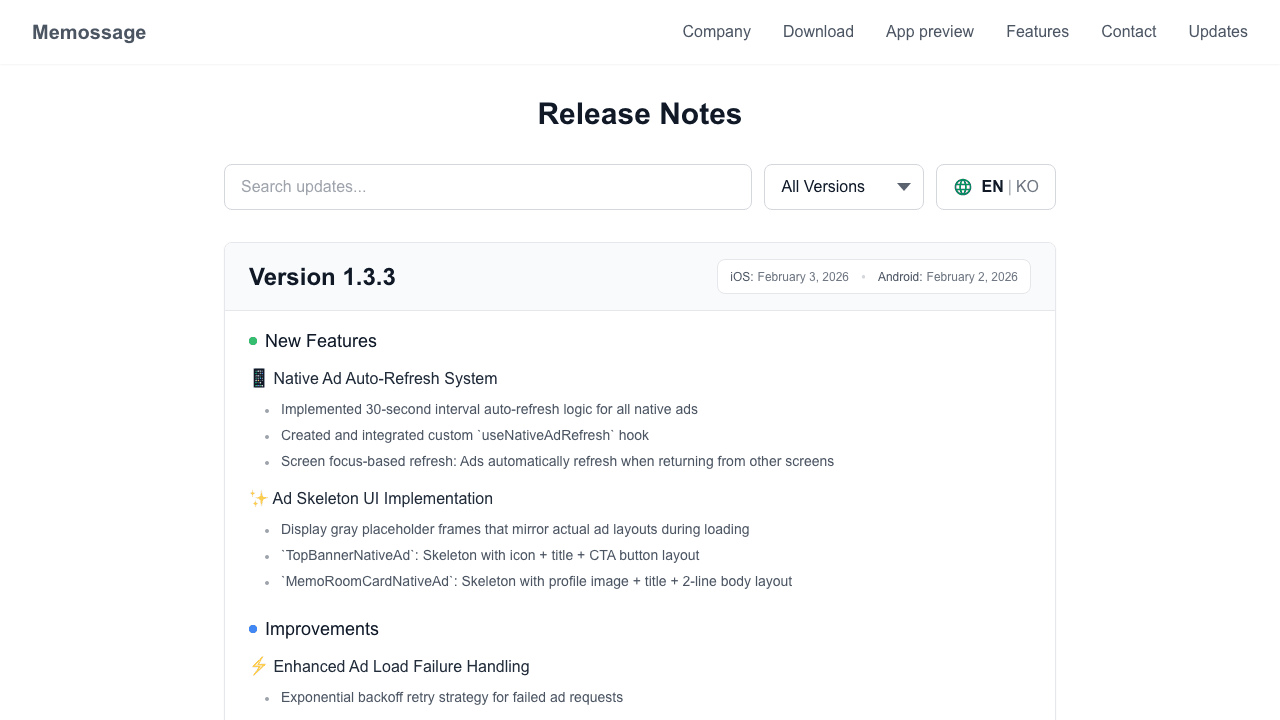
Memossage release notes showing version history and updates

The release notes are important because they document visible iteration, not just launch-day positioning.

  • The public homepage is titled "Memossage - Note Like You Chat, Find With a Tap."
  • The live site explicitly highlights app preview, features, and recent updates.
  • The release notes page lists versioned changes such as 1.3.3, 1.3.2, and earlier update details.
  • The public product presence includes both product marketing and evidence of continued maintenance.

How Memossage expanded without losing speed

Start with capture, then add structure

Search, folders, and room-level organization were layered onto the product because retrieval becomes a real problem only after users accumulate notes. LaunchForge kept the initial interaction simple and made later structure support that original speed.

Treat release notes as product proof

The live update history matters because it shows the product is maintained in public. That creates stronger trust than a static marketing page without visible changes over time.

Expand utility without abandoning the original behavior

Photos, checklists, markdown-style formatting, export, and customization increase product range while preserving the central premise that capture should stay lightweight.

Where the product stands today

Memossage is a live, publicly presented product with store distribution cues, feature depth, and visible maintenance through release notes. It is the clearest LaunchForge example of a shipped mobile product that kept evolving after first release.

What building Memossage taught us

The strongest lesson from Memossage is that a narrow behavioral thesis can be a better starting point than a broad feature checklist. LaunchForge learned to protect the original capture speed while expanding the product only where public use justified it.

Why Memossage matters on LaunchForge

Memossage proves that LaunchForge can ship a public mobile product, maintain it openly, and refine it around real interaction patterns instead of turning it into a generic all-purpose notes surface.